
Research
AI辅助色谱分离纯化与自动化平台
+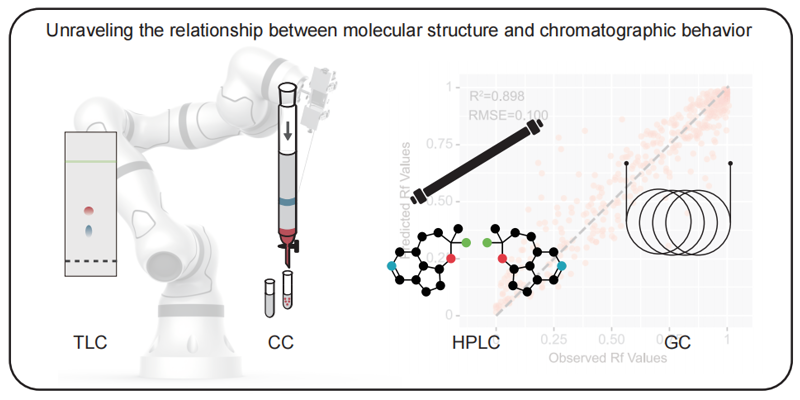
色谱分离技术是化学研究中不可或缺的核心工具,然而,其方法开发长期以来高度依赖研究者的个人经验与反复试错,导致分离过程效率低下、重现性差,成为制约化学合成与纯化效率的瓶颈。本课题组致力于将人工智能(AI)与实验室自动化深度融合,旨在将色谱分离从一门依赖直觉的“技艺”转变为可预测、可编程的“科学”。我们通过构建自动化机器人平台,获取标准化、大规模的高质量色谱数据,并开发了嵌入机理约束的机器学习模型(如QGeoGNN、ChiGNN等),实现了从薄层色谱(TLC)到高效液相色谱(HPLC)等多种分离模式的跨尺度、可解释性预测。这一整合框架不仅能够精准预测化合物的保留行为与分离概率,更通过迁移学习与条件嵌入技术,确保了模型在不同实验室、仪器及色谱柱规格间的通用性与可迁移性,从而为化学科学研究提供了一种高效、可靠且可复现的分离解决方案。
Chromatographic separation, while essential in chemistry, has long suffered from inefficient, trial-and-error method development. Our group integrates AI with laboratory automation to transform chromatography from an empirical art into a predictive science. By using robotic platforms for standardized data acquisition and developing mechanistically-informed machine learning models (e.g., QGeoGNN), we achieve interpretable predictions across modalities from TLC to HPLC. This framework accurately forecasts retention and separation probability, and ensures portability across labs and instruments via transfer learning, offering a reproducible and efficient solution for chemical separation.
分子电子学&有机无机杂化材料
+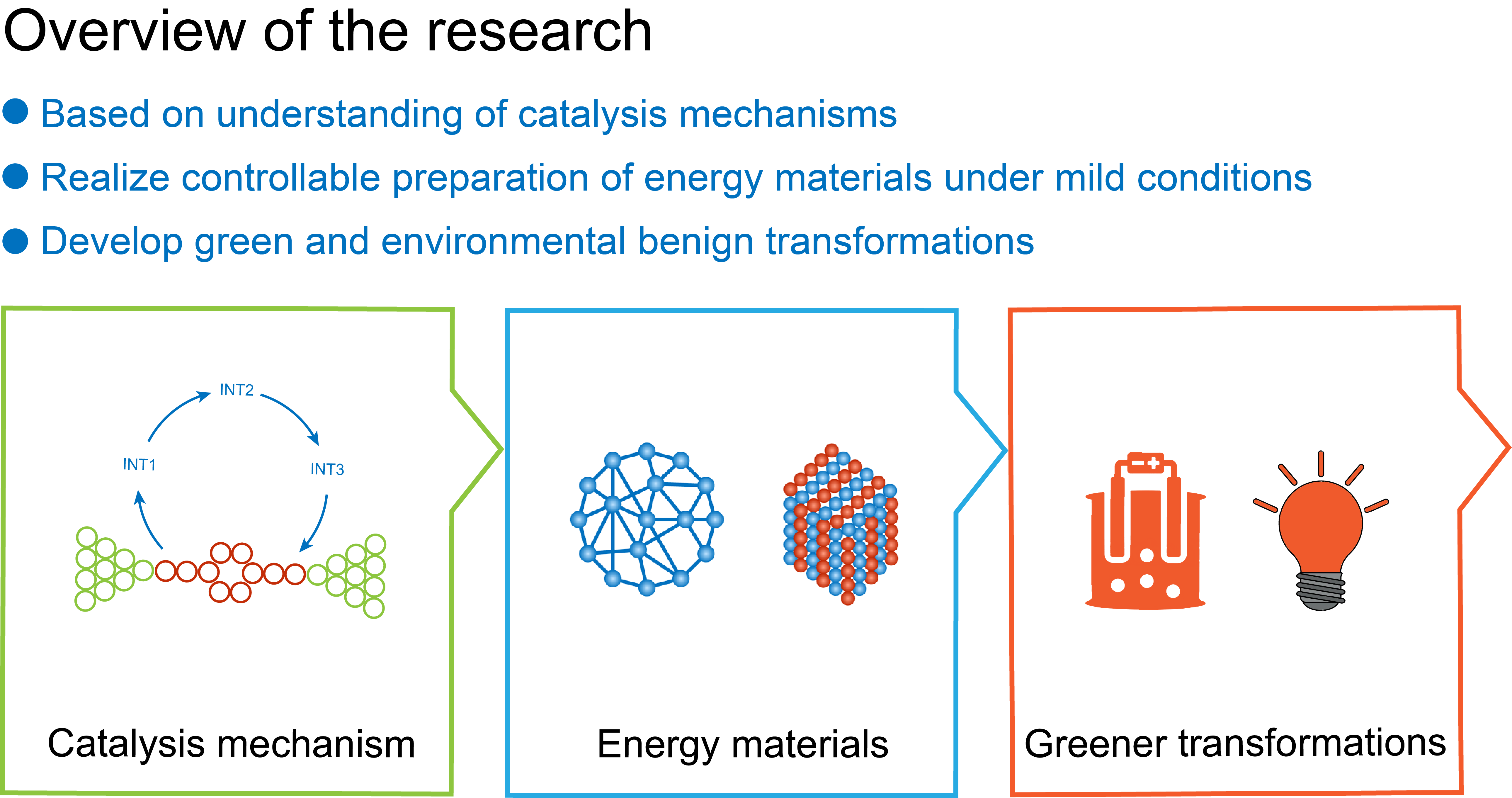
我们的研究致力于开发能量转换、拉曼等领域的二溴化合物修饰的半导体氧化物材料;同时,我们还首创应用单分子电检测平台来研究催化反应机制;现在和未来,我们致力于利用人工智能和机器人技术提高科学知识的生产效率,加速有机化学的发展,提高合成化学在材料制备和药物开发中的基础作用。
Our research group is committed to the development of semiconductor oxide materials modified by diboron compounds in energy conversion, photocatalysis, etc.; at the same time, we also pioneered the application of single-molecule electrical detection platform for the study of catalytic reaction mechanisms; now and in the future , we are dedicated in using artificial intelligence and robotics to improve the production efficiency of scientific knowledge, accelerate the development of organic chemistry, and improve the basic role of synthetic chemistry in material preparation and drug development.
AI预测分子光谱
+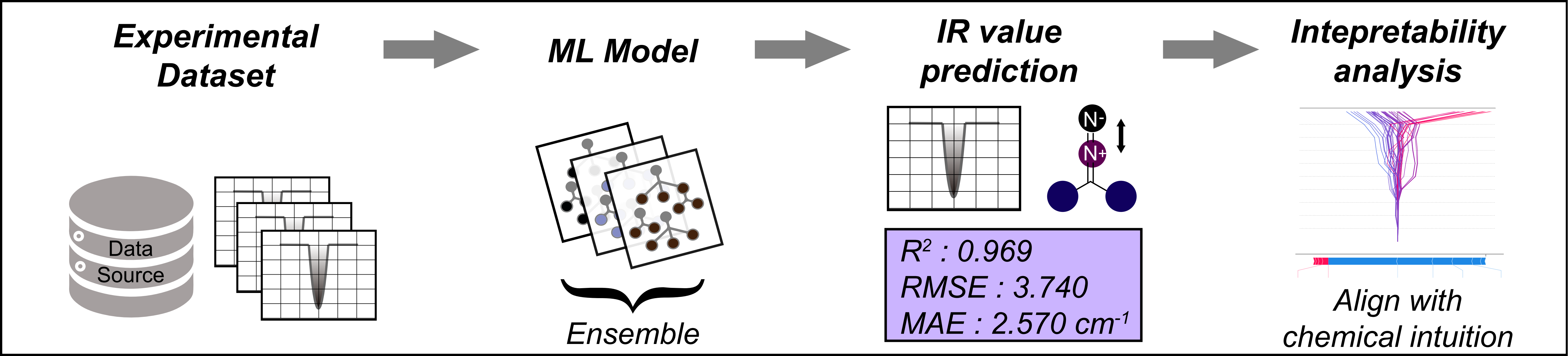
分子光谱(如红外、紫外、质谱及圆二色光谱)是解析分子结构与性质的关键手段,但其获取长期依赖耗时昂贵的理论计算或实验测量。近年来,深度学习技术的突破为光谱预测开辟了新路径。通过构建大规模、高质量的光谱数据集,并设计能够学习分子结构与光谱特征之间复杂映射关系的神经网络模型(如图神经网络、Transformer架构),研究者已能实现从分子拓扑结构到多种光谱的高效、精准预测。这一范式转变不仅将传统数小时的计算压缩至秒级,更通过解耦峰值属性等创新策略提升了模型的可解释性,为手性分子识别、药物筛选及材料设计等领域提供了强大的高通量分析工具,正推动光谱学从经验解析迈向智能预测的新阶段。
Molecular spectroscopy (e.g., IR, UV-Vis, MS, and ECD) is fundamental for characterizing molecular structure and properties, yet its acquisition has traditionally relied on time-consuming theoretical calculations or experimental measurements. Recent breakthroughs in deep learning have opened a new pathway for spectral prediction. By constructing large-scale, high-quality spectral datasets and designing neural network architectures (e.g., Graph Neural Networks, Transformers) that learn the complex mapping between molecular structure and spectral features, researchers can now achieve rapid and accurate predictions of various spectra directly from molecular topology. This paradigm shift compresses hours of computation into seconds and enhances model interpretability through strategies like decoupled peak property learning. This advancement provides a powerful high-throughput analytical tool for chiral molecule identification, drug discovery, and materials design, propelling spectroscopy from empirical analysis toward an era of intelligent prediction.
AI化学发现与合成引擎
+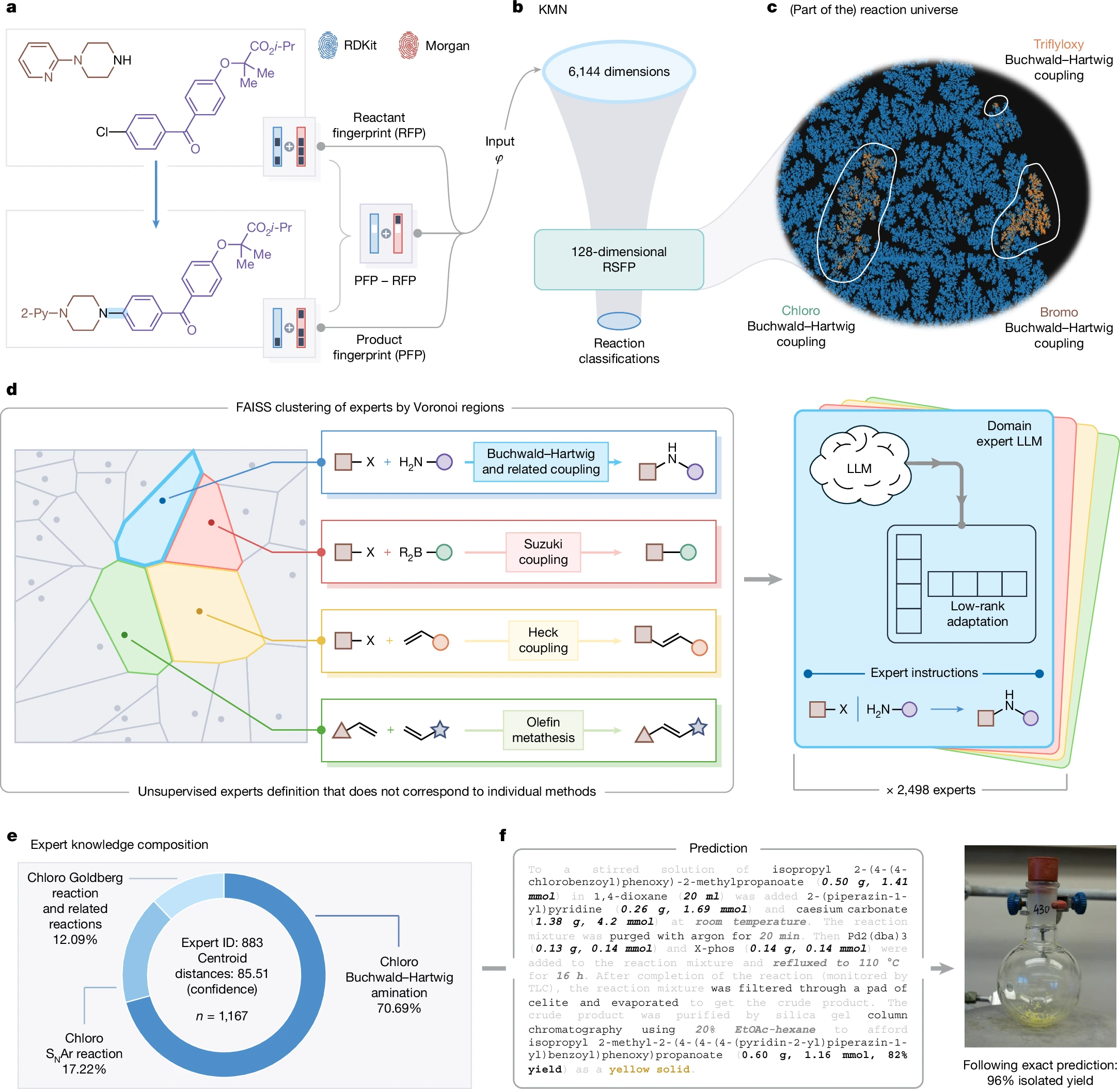
分子发现与合成长期依赖直觉试错,效率低、成功率差。本课题组打造AI化学发现与合成引擎,融合大模型分子表示、逆向合成与分子设计,推动从“经验试错”到“计算驱动”的范式转变。我们发展化学大模型分子表征,突破传统指纹局限,实现分子结构、反应性与性质的多层次语义理解;构建机理约束的逆合成引擎,高效推理可行合成路径;并以多维性质约束实现精准分子生成与优化。该引擎通过算法预测与湿实验闭环迭代,为药物与材料创新提供高效、可复现的通用底座。
Molecular discovery and synthesis have long relied on intuition and trial-and-error, leading to low efficiency and success rates. Our group builds an AI engine that integrates large-model molecular representation, retrosynthesis, and molecular design, shifting discovery from empirical trial-and-error to computation-driven prediction. We develop chemically-aware molecular representations to capture multi-level semantics beyond traditional fingerprints; construct a mechanistically-informed retrosynthetic engine for reliable pathway inference; and achieve precise molecular generation under multi-property constraints. Through closed-loop iteration of prediction and wet-lab validation, this engine delivers an efficient and reproducible foundation for drug and materials innovation.